FM:SYSTEMS · CONCEPT 2023
FMS:Agriculture: IoT Monitoring for Farms, Livestock and Wildlife
Overview
An award-winning vision to take FM:Systems’ workplace IoT into agriculture.
FMS:Agriculture reimagined FM:Systems’ workplace sensor technology for a completely new market: farms, stables and conservation teams. For the 2023 FM:Systems Hackathon, themed “Diversify: What is the potential?”, I originated a concept, titled “FMS:Agri IoT: A Vision”, that mapped hardware the business already owned onto real agricultural needs.
The concept won the Innovation award and started a working relationship between design and the hardware team.
- Role
- Senior UX/UI Designer & Design Team Lead (concept originator)
- Timeline
- August 2023
- Team
- UX/UI Design FM:Systems Hardware Team
- Skills
- Product Innovation Concept Development UX Strategy User Research IoT Experience Design Mobile UX Brand Extension Presentation Design
The Product
FM:Systems built IoT for the workplace.
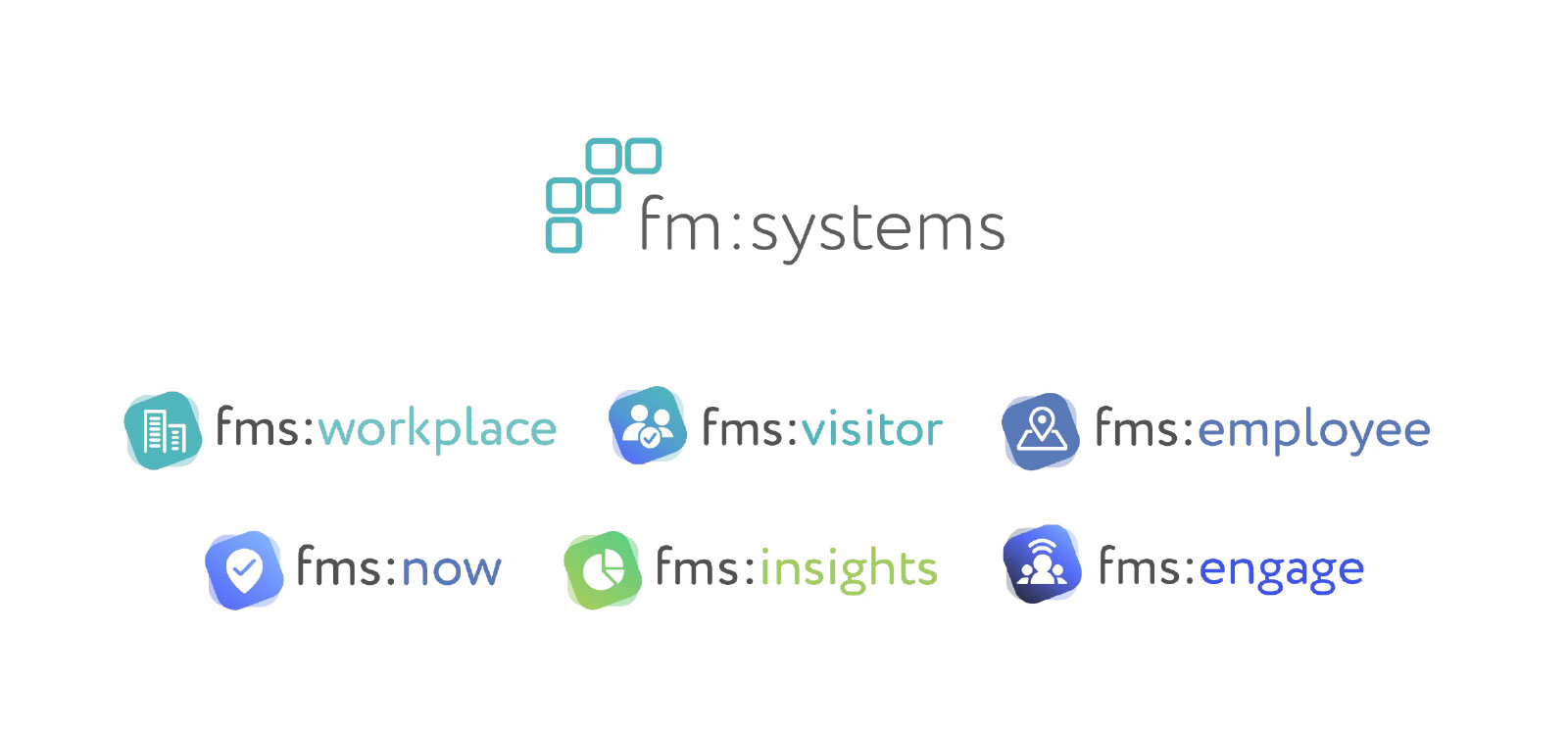
FM:Systems delivered workplace management software, including fms:workplace, fms:visitor, fms:employee, fms:now, fms:insights and fms:engage, alongside a range of hardware sensors built for offices.
Its sensors, dashboards and notifications were designed entirely around the workplace market. For the 2023 hackathon, which took place while FM:Systems was transitioning into Johnson Controls, I brought forward a question of my own: how might the business diversify? That question became the starting point for FMS:Agriculture.
The Problem
Powerful monitoring technology, aimed at only one market.
FM:Systems’ sensors and analytics served the workplace and nothing else, yet the same technology could answer urgent needs elsewhere. In agriculture, farmers often discover that an animal is sick, stressed or straying too late, and losses follow. A clear example raised in my research: an early warning when one animal falls ill in a stable, before disease spreads to the rest.
The context made the case stronger. South Africa is a heavily agricultural country, and load-shedding makes energy monitoring increasingly important. There was even a market signal close to home for FM:Systems: NC State University in Raleigh, near the company’s US base, runs a large agricultural school.
The Opportunity
Take technology the business already owned into a new market.
Rather than build something from nothing, the opportunity was to point existing, proven hardware at agriculture. To ground the idea in reality, I worked with the hardware lead, who walked me through the full FM:Systems sensor range so I could map each device to a genuine agricultural use.
The result was a concept with commercial logic: a new market for products the business had already invested in, with early warnings that could prevent real losses for farmers, stables and conservation teams.
Mapping the Hardware
Each existing sensor, matched to an agricultural use.
I mapped the current hardware to specific markets, showing how little needed to change to serve them. The People Counter, accurate to 95 to 98 percent, could count animals through gates or into sheds on dairy farms and in wildlife settings. The Open Area sensor could gather wildlife and conservation data, and the PIR sensor suited stables, dairy farms and veterinary settings.
The AirThings air-quality sensor was the most versatile, covering animals and vegetation including greenhouses and nurseries. It measures CO2, humidity, temperature, air pressure, noise, pollution, allergens, light, methane and virus risk. Its VOC readings spike with animal waste, and its CO2 levels show whether a space is healthy for animals.
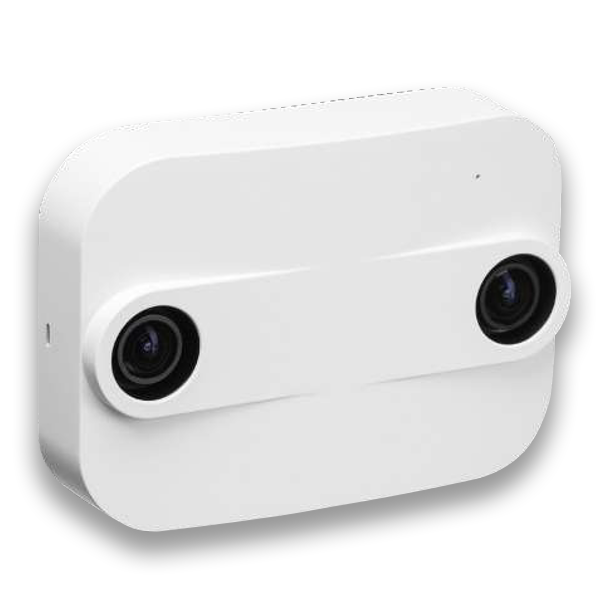 People Counter95 to 98% accuracyDairy farms & wildlifeCounting animals through gates and into sheds
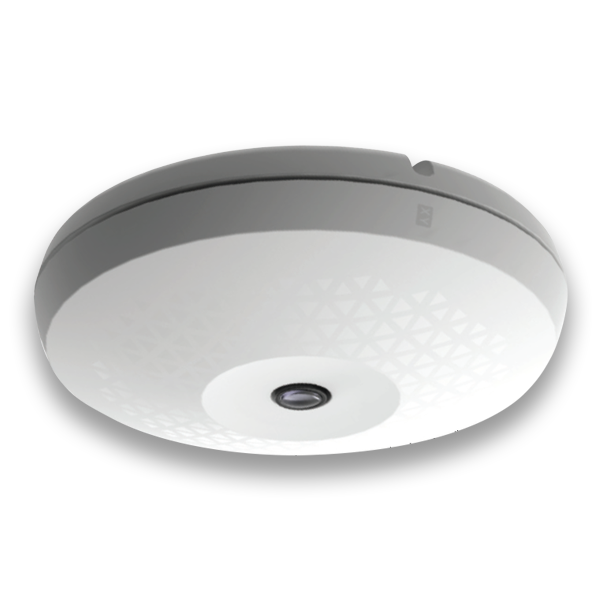 Open Area sensor200 to 1000 sq ftWildlife & conservationGathering wildlife and conservation data
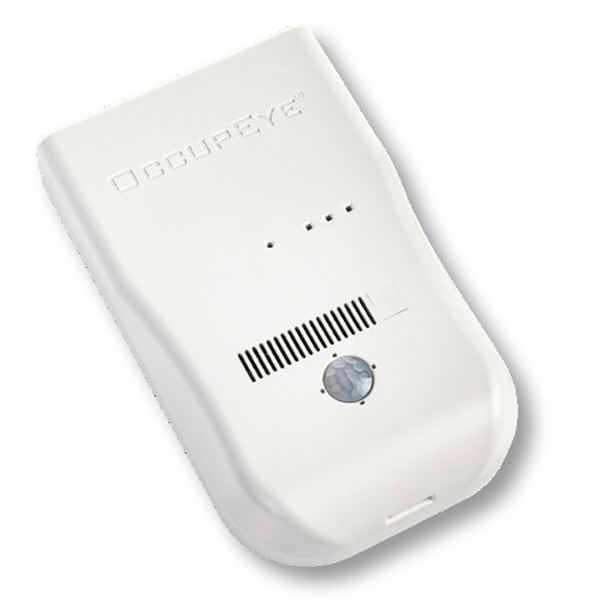 PIR sensorDesk or small areaStables, dairy & veterinaryPresence sensing in stalls, pens and clinics
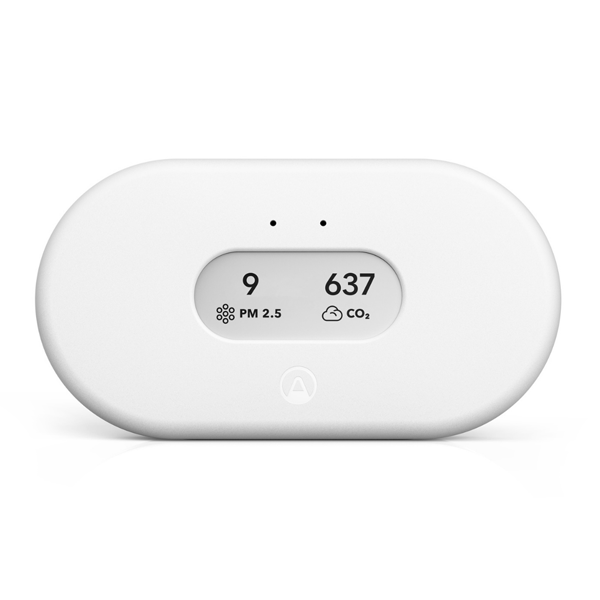 AirThings air-quality sensorCO2 · humidity · temperature · methane · VOCAnimals & vegetationIncluding greenhouses and nurseries
Existing workplace sensors, repurposed for farms, livestock and wildlife
Wearables
One new hardware idea to extend the range: wearables.
Beyond repurposing existing sensors, the concept proposed a new wearable device for animals. It would monitor movement, alert when an animal’s average temperature is abnormal to anticipate sickness, and alert when animals wander beyond a pre-defined location.
It would also handle calving and in-heat detection, and GPS tracking, giving farmers a single, proactive view of animal health and whereabouts.
- Movement monitoringTracks activity levels across the day
- TemperatureAlerts on an abnormal average to anticipate sickness
- LocationAlerts when an animal wanders beyond a pre-defined area
- Calving & in-heat detectionFlags key breeding moments
- GPS trackingLive whereabouts of each animal
A single, proactive view of animal health and whereabouts
How It Works
From device to farmer, in real time.
The system followed a simple path: a device, whether an existing sensor or a new wearable, sends data through network towers to the cloud, then to a mobile app. One app manages multiple devices, so farmers get immediate alerts the moment something isn’t right.
Research surfaced further possibilities the same platform could support. The air-quality, temperature and humidity sensing that keeps a greenhouse or a stable healthy extends naturally to food safety, tracking the conditions food is grown, stored and moved in and flagging spoilage or a broken cold chain before produce is lost. Alongside it sat energy management, carbon-footprint tracking, and asset tracking with tamper alerts, for example cold-chain monitoring on delivery trucks.
One app manages multiple devices, so farmers get immediate alerts the moment something isn’t right.
The Brand
An identity that belonged to the fms product family.
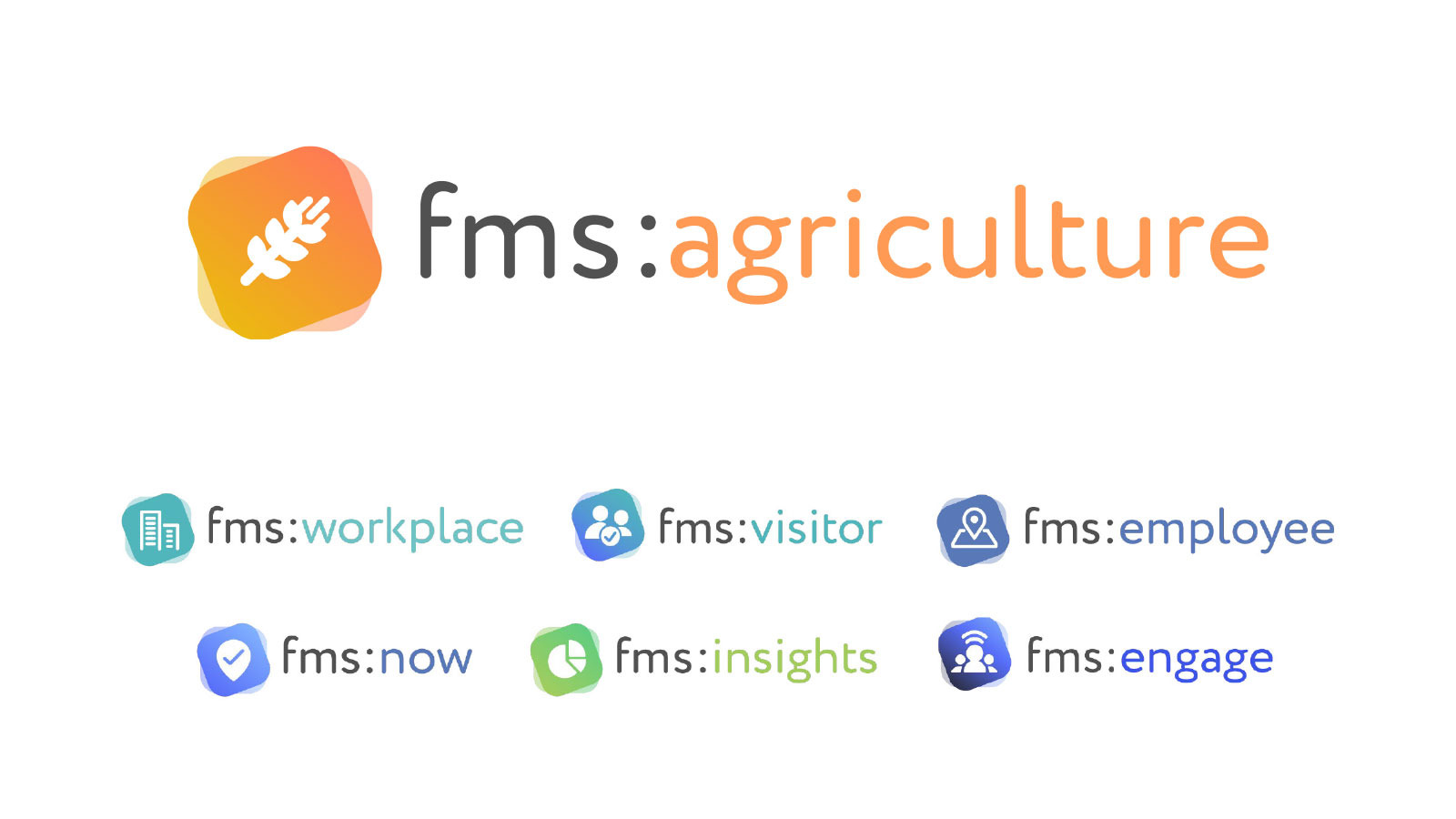
To present the concept as a real product rather than an idea, it needed an identity. I art directed the fms:agriculture brand mark, created in the fms product-family style: an orange wheat icon that sat naturally alongside the existing fms:workplace, fms:now and fms:insights marks.
Giving the concept a proper brand helped the pitch land, showing stakeholders a credible, ready-to-imagine product rather than a rough proposal.
Outcome
A new market found for technology the business already owned.
FMS:Agriculture won the Innovation award at the 2023 FM:Systems Hackathon. As a concept, its value was in the thinking: identifying a genuine new market for existing technology, and demonstrating product and commercial insight beyond design execution.
It also started a lasting working relationship between design and the hardware team, including plans for UX input on next-generation device panels, which until then had been designed by technicians without any UI or UX review.